Plant yn neidio oddi ar SUP i'r llyn yng Nglan-llyn

Introduction

Sir Ifan’s next idea was to bring children from across Wales together in a Welsh residential centre. The aspects used to attract the first campers was enthusiasm for Wales, the sense of adventure and the opportunity to meet other young people from all over Wales. In September 1927 Sir Ifan wrote in ‘Cymru’r Plant’ that a camp would be held at Llanuwchllyn for ten days, at a cost of ten shillings. The camp would be held for about a hundred boys in August 1928.

The cooking methods were primitive and they had very few facilities. They had eighteen tents and a large marquee. The campers washed in the river; very different to the luxury in the residential centres today! These first camps were extremely successful and similar camps were held for girls. During the next few years camps were held at Llangollen, and the cooking and sleeping facilities were improved.

National movement

The residential centres were not the only facilities to be developed during this period. The Urdd became an important national movement and the number of Aelwydydd grew at a substantial rate. The Urdd received generous grants which ensured that staff could be employed in different areas across Wales. Grants were received from education authorities to fund buildings suitable to be used by aelwydydd and to buy equipment. By May 1941, 83 aelwydydd had been set up across Wales.

Between the ‘adrannau’ and the ‘aelwydydd’ and the ‘Young Wales Club’ for Welsh learners, the movement had 817 branches with a network of local and county committees in every area from Anglesey to Swansea and to be held in all year round.

In a meeting in Corwen in 1928 it was suggested that a National Eisteddfod was to be held and funded by the Urdd. Preparations were made for a two day event at Corwen in 1929 at the end of May. A procession was held and a prestigious ceremony took place at the Corwen Pavilion with flags and three queens were chosen to sit on the Eisteddfod thrones. The high standard of competition was praised.

In the second Eisteddfod at Caernarfon in 1930, 3000 competitors gathered together and the town ground to a halt for two days. One of the most memorable Eisteddfodau during this early period was the Eisteddfod at Carmarthen in 1935. The press was full of news reports about this unique event that had taken over the whole town. Thousands flocked to the pavilion which held 12,000 people and the Urdd Eisteddfod made a great impression in Wales and beyond.

The Second World War was a great blow to the Eisteddfod, but even though there were threats from every direction, the Eisteddfod was still held in 1940 at Rhyl. Even though this Eisteddfod was only held for one day many children and young people came to compete. The opportunity to travel was very limited during this time. The Eisteddfod gave children, young people and their families the chance to see the country, and to compete against other children and young people from different backgrounds.

By the mid 1950’s the nature of the festival was transformed, and it started to concentrate more and more on competing and culture instead of on the marching and celebrating elements. New aspects were developed every year with an art exhibition being introduced at Abertridwr in 1955 and a classical concert at the Eisteddfod in Mold in 1958.

As well as the Eisteddfod the Urdd decided to venture and innovate in many new areas to promote the Welsh language. In this period Sir Ifan decided to establish a Welsh cinema to promote the Welsh language and culture to a wider audience. The film ‘Y Chwarelwr’, which cost £2000 to produce, travelled around the country. The cinema was used by Sir Ifan to promote the movement’s activities.

Conclusion

After his experience in the Great War and all the destruction and suffering that came with it, Sir Ifan ab Owen Edwards decided that there was a need to build bridges between different cultures and nations. The Message of Peace and Goodwill was announced for the first time by Gwilym Davies, a Welsh representative in the League of Nations. Sir Ifan thought that the Urdd should join the campaign to broadcast the message and banish the ignorance and prejudice that existed between the nations of the world. Therefore in 1925, the message was broadcast jointly by the Urdd and the League of Nations. In 1930 it was decided that May would be the month of Goodwill and the message was promoted in ‘Cymru’r Plant’. By 1934 the BBC took part in announcing the message and even though it came to an end over the Second World War, a series of articles on peace and love between countries was published under the title, ‘Cymru a’r Byd’. (Wales and the World)

It was important to Sir Ifan that children in Wales had the opportunity to meet other children from countries across the world. In 1930 he organised a voyage for a group of boys to Geneva, the home of the League of Nations. After the success of that voyage, Sir Ifan decided to organise another similar voyage for girls. The Urdd continued to organise different voyages over a period of time. In 1933 a group of Urdd members sailed from Wales to Scandinavia and Norway, with hundreds of older members paying £15 to travel on this unique, Welsh voyage to the North of Europe.

Sir Ifan decided that voyages should be organised as often as possible and organised trips to Brittany, Spain, Portugal, the Mediterranean Sea and North Africa. These voyages came to an end in 1939 with the start of the Second World War. From then on shorter, cheaper voyages were organised for a smaller number of people. After the war the Urdd organised trips for young people to Europe, and opportunities were given to restore international relations. In 1948 the first international camp was organised at Aberystwyth. The camp was held every year until 1960, and drew young people to Wales from around the world to socialise, to learn and to enjoy a holiday on the Welsh course. The Urdd was one of the first organisations to welcome young Germans after the Second World War.
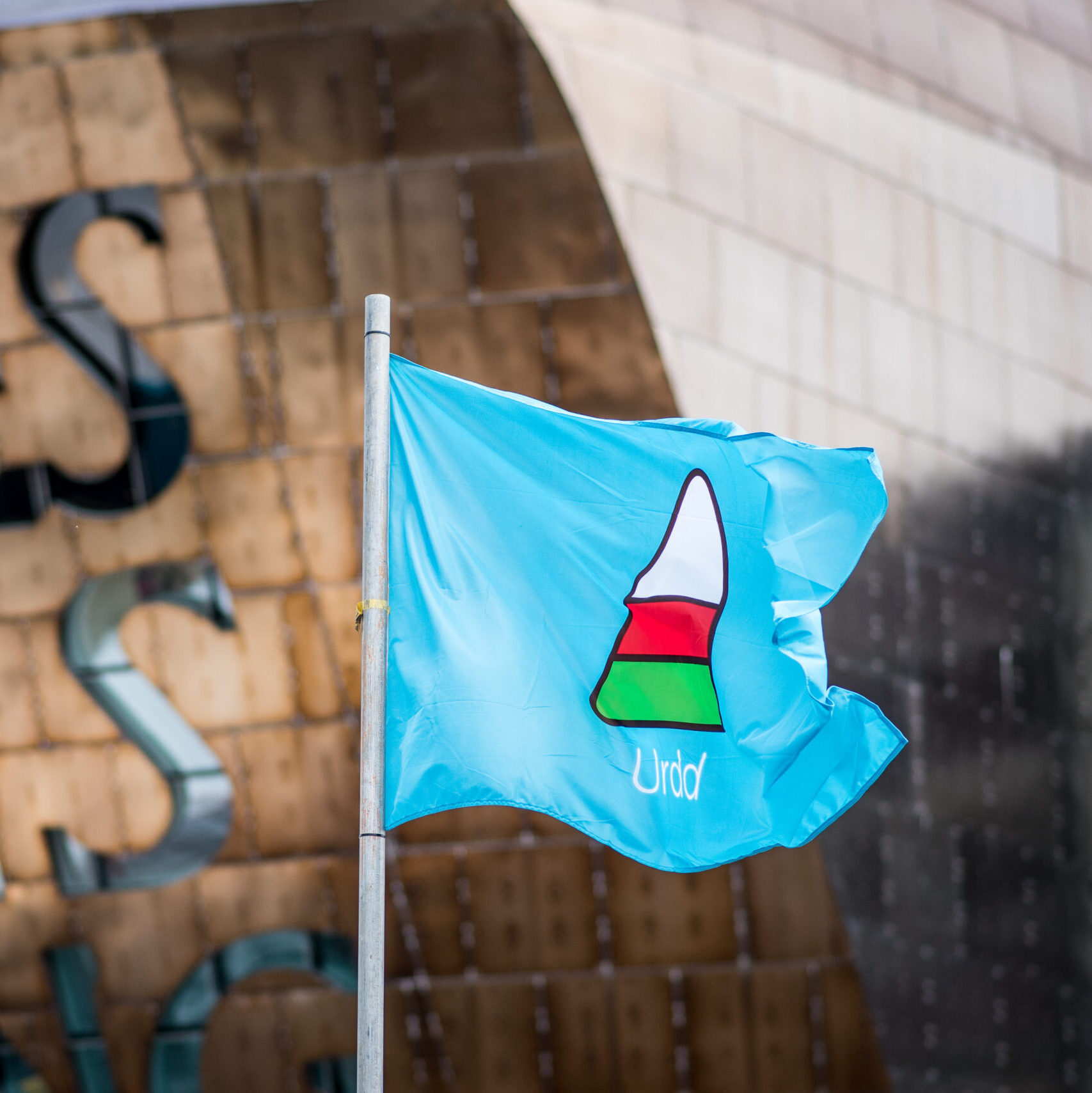
Baner Glas yr Urdd yn chwifio o flaen Canolfan y Mileniwm

About us

Learn more about the Urdd and who we are